|
|
Outline: Clashing Civilizations, Culture Wars, and the Academy: The Illuminating Role of "Worldview"
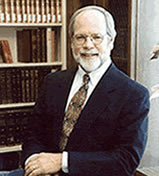
Dr. David K. Naugle
Dr. David K. Naugle is chair and professor of Philosophy at Dallas Baptist University. He earned a Th.D. in systematic theology, and a Ph.D. in humanities with concentrations in philosophy and English literature. He is also the director of the Paideia College Society (formerly Pew College Society) the goal of which is the transformation of students, the reformation of the Church and the renewal of the various aspects of cultural life.
Dr. Naugle serves as a Fellow for the Wilberforce Forum, the Christian worldview think tank sponsored by Prison Fellowship in Washington, D. C. He serves as an associate editor of Findings, a quarterly journal produced by the Wilberforce Forum on worldview issues. He is also the editor of The Worldview Church E-Newsletter published by the Wilberforce Forum as an information source designed to encourage Church leaders to implement a Christian worldview in their congregations. Dr. Naugle is the author of Worldview: The History of a Concept(Eerdmans 2002), selected by Christianity Today magazine as the 2003 book of the year in the theology and ethics category. Prior to his post at DBU, Dr. Naugle was an adjunct professor of religion at the University of Texas at Arlington from 1980-1988.
Introduction
- Samuel P. Huntington—“The Clash of Civilizations”
- James Kurth “The Real Clash”
- The clashes among scholars at the university
- Thesis: the notion of worldview—German, Weltanschauung—can help elucidate the character of these global and local controversies, including the conditions in the academy today
The Word-History of Weltanschauung
- Immanuel Kant coined the term “worldview” or Weltanschauung in his book Critique of Judgment, published in 1790.
- Worldview/Weltanschauung in German and other European languages
- Worldview in an Anglo-American context
- Worldview in theology and the Church (Abraham Kuyper, James Orr, Carl F. H. Henry, Francis Schaeffer)
Definitions of Worldview
- Søren Kierkegaard
- Wilhelm Dilthey
- Martin Heidegger
- Postmodernists
- James Orr
- Abraham Kuyper
- James Sire
- David Naugle, Worldview: The History of a Concept (wv = vision of the heart)
A World[view] of Difference
-
Joni Eareckson Tada: "If we violate a human embryo today, tomorrow we will become callous about the fetus, then the infant, and then people with physical defects...let's influence society with reasoned judgment, strength of character, and a commitment to improve our culture, not diminish it."
- Christopher Reeve: “We must pursue research on embryonic stem cells. …it is our responsibility to do everything possible to protect the quality of life of the present and future generations. A critical factor will be what we do with human embryonic stem cells. … no obstacle should stand in the way of responsible investigation of their possibilities.”
Human Nature and Worldview
Knowledge is Perspectival
- C. S. Lewis, “Meditation in a Tool Shed”
- Postmodern observation: discourse is situated and pre-conditioned
- Philosophy of science: science is rooted in personal knowledge and is paradigm dependent (Michael Polanyi and Thomas Kuhn)
Worldview and the University
- Academic neutrality is a myth
- Pursuit of Truth is affected by underlying worldviews: “the particularity of cognitive access” (N. Wolterstorff)
- Professors ought to be willing to disclose the particulars of his or her worldview orientation from which he or she is teaching and/or writing.
- In addition to the metaphysical and methodological naturalism that is the dominant worldview in the academy today, there ought to be room for scholarship and teaching that is informed by responsible religious perspectives as well.
Problems:
- The university is denied meaningful access to one of the primary intellectual traditions that contributed substantially to its own development.
- The selective definition of "pluralism" currently in vogue tends to promote the expression of all but religiously informed points of view.
- The all too easy equation of religion with "indoctrination" and secularism with "education" evidences a marked double standard.
- Students are denied access to an education that adequately prepares them to function within a society of substantial religious constituencies.
Possibilities:
- Demonstrate a more authentic commitment to academic freedom.
- Foster greater dialogue and understanding between disparate worldviews
- Move beyond the prevailing utilitarian, information-driven, and career-oriented vision of higher education
Conclusion
In the interests of genuine pluralism and academic freedom, and in light of what a Christian Weltanschauung has contributed historically and can offer to the academy today, room ought to be made in addition to naturalism for theistically informed points of view on the university campus which can thereby serve as a template for the rest of society as neither a naked or sacred, but as a genuinely civic public square.
© Copyright David Naugle. Used by permission.
Delivered at the Christian Leadership Ministries SMU Luncheon Lecture Series in September 2003.
Email this to a friend
copyright
© 1995-2012
Leadership U. All rights reserved.
Updated: 19 September 2005
|